
English


Views: 0 Author: Site Editor Publish Time: 2026-08-28 Origin: Site


Viral outbreaks in high-density commercial waterfowl operations carry compounding financial risks. Diseases like Duck Viral Hepatitis and Gosling Plague transmit rapidly through shared water sources and close-contact housing. They cause devastating mortality rates in young flocks, often wiping out entire barns within days. You cannot afford to treat biologics procurement as a generic purchasing task. Securing reliable supply chains for specialized waterfowl biologics differs fundamentally from general livestock procurement. You face strict cold-chain requirements, narrow strain specificity, and highly variable manufacturing standards across different regions.
A formalized procurement plan is essential to protect your margins and your animals. You must shift from reactive purchasing to a strategic, criteria-driven evaluation of suppliers providing critical biologics. By building a structured procurement strategy, you transform unpredictable health expenses into manageable, forecasted investments that secure flock survivability.
Strain Matching is Non-Negotiable: Procurement must prioritize biologics mapped to regional epidemiological data rather than generic formulations.
Cold-Chain Integrity Dictates Efficacy: Supplier evaluation must heavily weight logistics capabilities, particularly for freeze-dried and live-strain products.
Proactive vs. Reactive Procurement: Balancing preventative vaccines with rapid-response antibodies minimizes flock loss and stabilizes operational forecasting.
Lifecycle and Labor Alignment: Procurement schedules must integrate seamlessly with veterinary immunization schedules, flock lifecycles, and available farm labor for specific administration routes.
Maternal Antibody Management: Procurement schedules must align with veterinary timelines to avoid neutralizing administered vaccines.
Establish baseline flock mortality and morbidity rates before transitioning to a new supplier. You need hard data to measure success accurately. Track historical losses, feed conversion ratios, and veterinary treatment costs over the past several production cycles. Once you introduce new duck vaccines and antibodies, monitor specific success indicators closely. Look for high seroconversion rates in your breeder flocks through routine blood testing. Measure the exact reduction in clinical outbreaks among juvenile birds. Track any adverse post-vaccination reactions, such as localized swelling or temporary lethargy. A successful procurement strategy directly improves these metrics.
Execute these specific steps to build your baseline data profile:
Extract the last 24 months of mortality logs across all grow-out facilities to identify seasonal disease spikes.
Quantify the exact volume and cost of secondary antibiotics used to treat opportunistic infections following viral challenges.
Establish a standardized serology testing protocol, drawing blood samples from 1% of the flock at 14 and 28 days post-vaccination.
Document the baseline feed conversion ratio (FCR) to measure how subclinical viral loads currently impact flock growth rates.
Your procurement strategy must separate preventative stockpiling from reactive supply lines. Preventative vaccines provide long-term active immunity. You schedule these deliveries months in advance based on flock lifecycles and seasonal disease pressures. Reactive procurement involves hyperimmune antibodies. These provide immediate passive immunity during acute outbreaks. You need rapid-access supply lines for these products. If an outbreak hits, waiting weeks for delivery means losing the flock. Build contracts that guarantee emergency overnight shipping for critical antibodies. Maintain a clear division in your budget for planned vaccine purchases versus emergency antibody reserves.
Strategy Type | Primary Biologic | Immunity Type | Delivery Timeline | Budget Allocation |
|---|---|---|---|---|
Preventative | Live/Killed Vaccines | Active (Long-term) | Scheduled months in advance | Fixed, forecasted operational expense |
Reactive | Hyperimmune Antibodies | Passive (Immediate, Short-term) | Emergency overnight shipping | Variable contingency reserve |
Procurement volumes and delivery timelines must map exactly to your production stages. Breeder flocks require a completely different strategy than grow-out or meat flocks. For breeders, you focus on maximizing maternal antibody transfer to the offspring. You procure vaccines that build high, sustained titers in the adult birds over a long laying cycle. You time these deliveries to align with pre-lay handling schedules. For meat flocks, the focus shifts to rapid, early-life protection. You need biologics that can be administered safely to day-old birds. Coordinate closely with your veterinary staff. Ensure delivery dates align with planned immunization schedules to avoid storing products in farm refrigerators longer than necessary.
Evaluating specific antibodies requires technical rigor and attention to manufacturing details. When sourcing Duck Viral Hepatitis Freeze drying Antibodies, scrutinize the lyophilization quality. The freeze-drying process must preserve the structural integrity of the proteins without causing degradation. If the lyophilized cake appears collapsed or discolored inside the vial, the moisture content during manufacturing was likely too high. Test the reconstitution stability on the farm. The product must dissolve completely in the sterile diluent within seconds and remain stable long enough for farm workers to administer it to thousands of birds.
Verify the specific neutralizing titers against prevalent serotypes in your region. Type 1 and Type 3 are common, but they require entirely different antibodies. Generic formulations will fail if they do not match the specific field strain threatening your farm. Request field trial data from the manufacturer demonstrating the antibody's ability to halt mortality in an actively infected flock within 24 to 48 hours of administration.
Live attenuated vaccines targeting Derzsy’s disease require careful evaluation before procurement. When assessing the Gosling Plague Vaccine Live Strain GD, you must balance attenuation safety with immunogenic efficacy. The strain must be attenuated enough to prevent reversion to virulence. It cannot cause the disease it is meant to prevent under field conditions. However, it must remain immunogenic enough to stimulate a robust protective response in the gosling.
Request safety trial data from the manufacturer. Look for evidence of passage stability over multiple generations. The vaccine must perform consistently across different flock genetics, housing environments, and stress levels. Evaluate the recommended administration route. Some live strains perform exceptionally well via subcutaneous injection but lose efficacy if applied via drinking water due to chlorine or biofilm interference in the farm's plumbing.
Waterfowl operations sometimes rely on general poultry products when species-specific options are scarce or unavailable. Integrating broader poultry vaccines and antibodies carries inherent risks. You must understand the physiological overlap and limitations. Chickens and ducks have different immune system responses, lymphoid tissue distribution, and metabolic rates. A vaccine highly effective in broilers might offer limited or zero protection in waterfowl.
You must verify off-label efficacy and safety profiles rigorously. Demand scientific validation of cross-protection from the supplier. Work with your veterinarian to conduct small-scale safety trials before rolling out a chicken-derived vaccine to your entire duck flock. Monitor the test group for 14 days, checking for injection site lesions, lethargy, or unexpected mortality before authorizing a full-scale procurement contract.
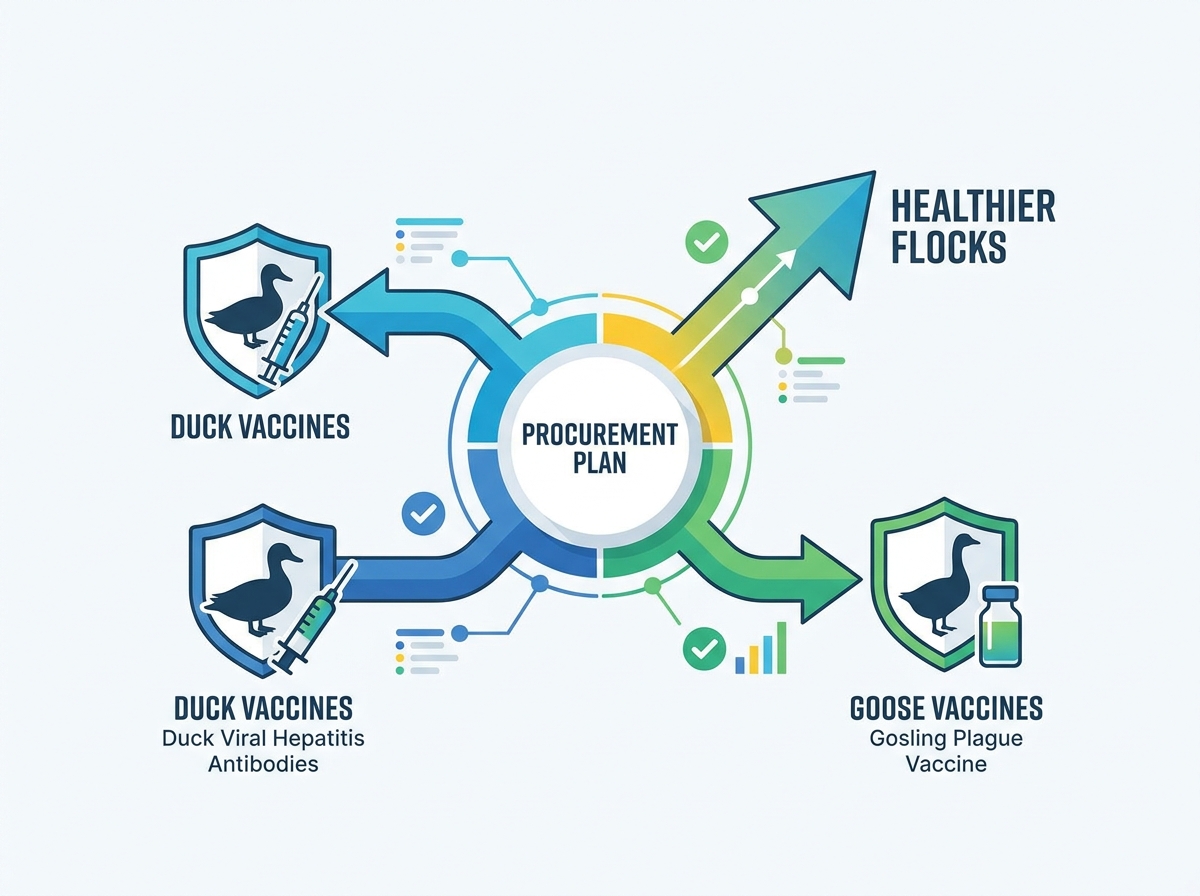
Audit your suppliers rigorously before signing long-term contracts. Demand proof of current Good Manufacturing Practice (GMP) certifications. Do not accept expired, pending, or self-issued certificates. Require transparent Certificates of Analysis (CoA) for every single shipment you receive. You need to verify batch-to-batch consistency in titer levels. A sudden drop in titer means a drop in flock protection.
Check the exact titer per dose listed on the CoA against your contract specifications.
Verify the residual moisture content percentage for freeze-dried products to ensure long-term stability.
Review the sterility test results to confirm the absence of bacterial or fungal contamination.
Confirm the expiration date provides sufficient runway for your planned immunization schedule.
They require strict temperature controls, typically at -15°C, from the manufacturer's warehouse to your farm refrigerator. Analyze the physical infrastructure of your logistics partners. Verify if they use validated active cooling containers or rely on cheap ice packs. Make temperature-logging devices a mandatory Service Level Agreement (SLA) in your procurement contracts.
Follow these steps when receiving a biologic shipment:
Extract the USB data logger from the insulated shipping container immediately upon arrival.
Download and review the temperature graph before signing the delivery manifest.
Reject the shipment entirely if the temperature spiked above 8°C for more than 30 minutes.
Transfer the cleared inventory immediately to a dedicated, alarmed farm refrigerator.
The physical format of the biologic dictates the delivery method on the farm. This directly impacts your labor costs and flock stress levels. Mass application methods, like drinking water administration or aerosol spray, require significantly less labor. They cause minimal handling stress to the birds. However, they can result in uneven dosing if water lines are dirty or spray droplets are the wrong size. Individual administration, such as subcutaneous or intramuscular injection, guarantees accurate dosing for every bird. It requires massive labor overhead and stresses the flock. Evaluate these trade-offs during procurement. Choose biologic formats that align with your farm infrastructure and available workforce.
Administration Route | Labor Requirement | Flock Handling Stress | Dosing Accuracy | Infrastructure Needs |
|---|---|---|---|---|
Subcutaneous Injection | Very High | High | 100% Accurate | Sterile needles, trained catch crews |
Drinking Water | Low | Minimal | Variable | Clean water lines, precise proportioners |
Aerosol Spray | Moderate | Low | Moderate | Calibrated sprayers, controlled ventilation |
Source only from suppliers fully compliant with regional veterinary directorates. Whether you operate under the USDA, EMA, or local equivalents, strict compliance is non-negotiable. Unregulated or gray-market products pose massive biosecurity risks to your operation. Ensure complete lot traceability from the factory to the individual barn. You must be able to track a specific vial back to the manufacturer's batch record instantly. This is critical for rapid recalls and adverse event reporting. Implement a strict First In, First Out (FIFO) inventory management system on the farm. If a flock experiences a severe reaction, you need to isolate and quarantine the remaining inventory from that specific lot immediately.
High-titer, strain-specific biologics carry a premium price tag. You must evaluate this upfront cost against the economic devastation of a massive mortality event. A 50% loss in a juvenile flock destroys your profit margin for the entire quarter. Calculate the true cost-benefit ratio. Factor in the cost of carcass disposal, lost feed conversion, wasted barn space, and disrupted processing schedules. The upfront cost of a premium vaccine is negligible compared to the financial impact of a full-blown outbreak. Treat biologics as a critical insurance policy for your operational revenue, not an area to cut corners.
Multivalent vaccines combine protection against several diseases into one single shot. They lower labor costs and reduce handling stress events for the birds. However, they can suffer from antigenic competition, where the bird's immune system responds poorly to one of the components because it is overwhelmed by the others. Single-dose targeted vaccines often provide higher specific efficacy. They allow for customized timing based on specific disease threats in your region. Evaluate your regional risk profile carefully. If one specific virus is highly prevalent, a targeted single-dose vaccine usually offers better protection than a broad-spectrum multivalent option.
Format Type | Labor Overhead | Handling Stress | Target Specificity | Risk of Antigenic Competition |
|---|---|---|---|---|
Single-Dose Targeted | High (Individual Administration) | High | Very High | Low |
Multivalent Formulations | Low (Fewer Administration Events) | Low | Moderate to High | Moderate to High |
Administering vaccines too early is a critical risk in waterfowl management. High levels of maternal antibodies will neutralize the vaccine antigen before the bird's immune system can respond. The bird remains completely unprotected. To mitigate this, mandate regular serological profiling of your breeder flocks. Understand the exact titer levels passed to the offspring through the yolk. Use this data to precisely time your juvenile vaccination schedules. Wait until maternal antibodies decline to a level that allows the vaccine to stimulate active immunity without interference. This often requires delaying live vaccinations until day 7 or day 14, depending on the specific breeder flock's immune status.
The return on investment for procured biologics depends entirely on flock immunocompetence. A stressed, malnourished, or overcrowded bird cannot mount a strong immune response. Ensure your procurement plans integrate with holistic flock management. Verify that your birds receive balanced diets formulated specifically for their growth stage. Maintain proper housing density to reduce social stress and lower ambient pathogen loads in the litter. Control ammonia levels in the barn, as high ammonia damages the respiratory tract and severely limits the efficacy of aerosol spray vaccines. Vaccines are biological tools. They require a healthy, robust host to function correctly.
Farm-level administration errors destroy the value of the best biologics on the market. Improper reconstitution of freeze-dried products, incorrect dosage volumes, and poor needle hygiene are common risks. Using a dull or contaminated needle causes tissue damage and introduces secondary bacterial infections like E. coli. Mitigate this by requiring suppliers to provide comprehensive, visual training materials. Demand on-site veterinary support for initial rollouts of new products. Establish clear, written dosing guidelines in the local language of your farm workers. Mandate needle changes every 500 birds. Conduct regular, unannounced audits of the vaccination process. Watch exactly how workers handle the vials, mix the diluent, and inject the birds.
Single-source dependency for critical biologics is a massive vulnerability. If your primary supplier suffers a manufacturing failure, a facility fire, or a logistics breakdown, your flocks are exposed. Establish secondary and tertiary approved suppliers for all critical vaccines and antibodies. Maintain a split-award contract strategy. Allocate 70% of your volume to your primary supplier and 30% to a secondary vendor. This keeps both accounts active and allows you to test the secondary supplier's delivery capabilities regularly. Continuous availability is far more important than securing a slight volume discount from a single vendor.
Extract and analyze your farm's mortality and serology data from the past 24 months to establish a hard baseline for evaluating new biologics.
Audit your current cold storage infrastructure, install redundant temperature alarms, and verify backup generator functionality.
Request and review the latest Certificates of Analysis from your primary biologics vendors to confirm batch-to-batch titer consistency.
Draft a split-award contract strategy to onboard a secondary supplier for your most critical hyperimmune antibodies.
A: Vaccines provide active, long-term immunity by stimulating the bird's immune system to produce its own defense mechanisms over several weeks. Antibodies provide immediate, short-term passive immunity. You administer them during active outbreaks to neutralize the virus instantly, buying time for the flock to recover.
A: Maintain strict cold-chain requirements, storing them consistently at -15°C. Protect the vials from direct UV light exposure. Once you reconstitute the freeze-dried powder with a sterile diluent, you must use the product immediately within the specific time window dictated by the manufacturer.
A: Standard administration timelines vary based on the breeder flock's immune status. You must adjust the schedule based on the maternal antibody decline curve in your specific juvenile flock. Administering it too early results in neutralization, while waiting too long leaves the goslings vulnerable to field infection.
A: Common methods include subcutaneous injection at the base of the neck, intramuscular injection in the breast or leg, and mass application via drinking water or coarse spray. Your farm infrastructure, labor availability, and the specific biologic format dictate the most appropriate delivery method.
A: Batch consistency ensures that every vial contains the exact titer level stated on the label. Inconsistent batches lead to uneven flock protection, leaving segments of your population vulnerable to disease. Transparent Certificates of Analysis verify this consistency and protect your financial investment.
A: Breeder hens pass antibodies to their offspring through the yolk. These maternal antibodies protect the young bird but will also attack and neutralize live vaccine antigens if administered too early. You must time vaccinations to occur exactly as these maternal antibodies naturally wane.


