
English


Views: 0 Author: Site Editor Publish Time: 2026-08-09 Origin: Site


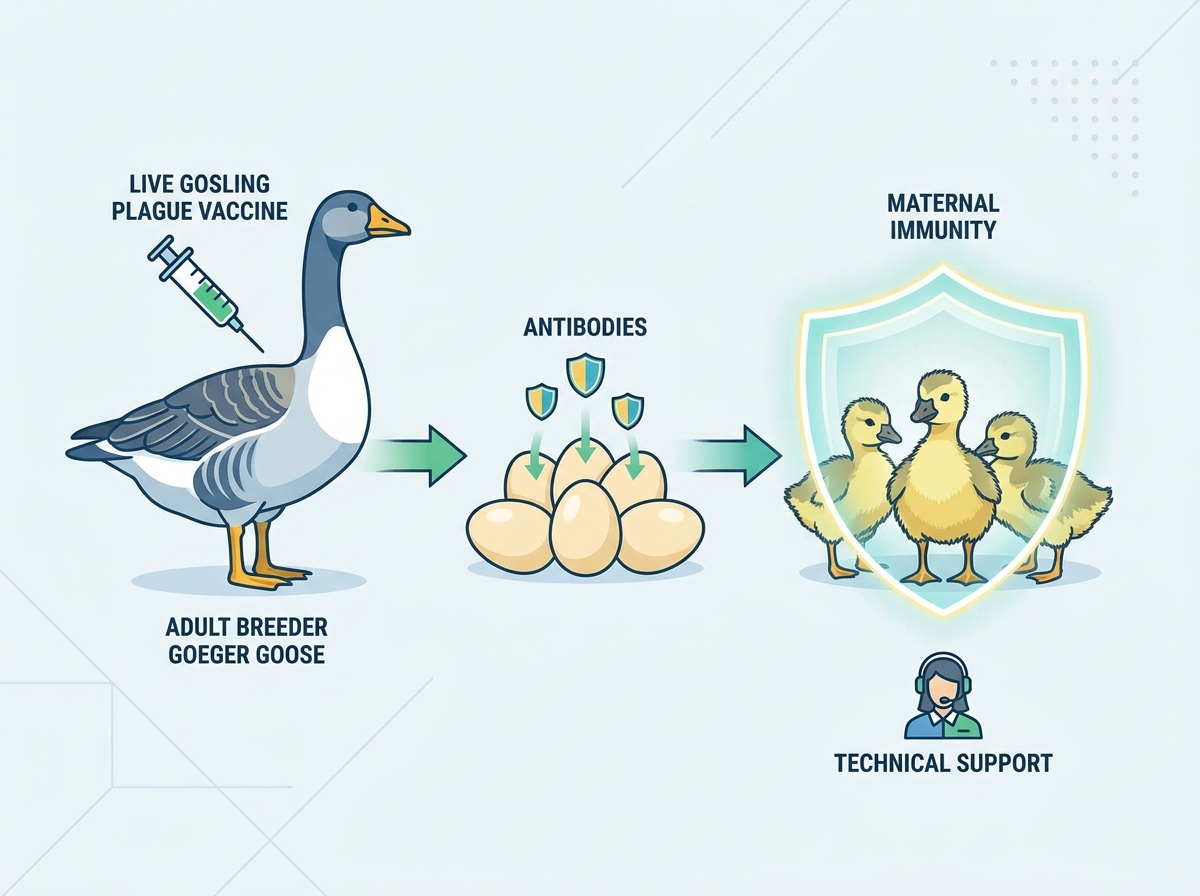
Goose Parvovirus, commonly known as Derzsy's disease, wipes out unprotected early-stage goslings with mortality rates often exceeding 90%. Day-old goslings hatch with immature immune systems. They cannot mount an active defense against early environmental exposure on the barn floor. Relying on post-hatch interventions fails. Reactive treatments lead to massive flock losses, stunted growth, severe anorexia, and heavy ocular discharge. You need a proactive defense. The only viable mechanism is transferring maternal immunity directly from the hen. Breeder farm managers must establish a high baseline of passive progeny protection before the laying cycle even starts. We evaluate how optimizing breeder flock vaccination protocols achieves this exact goal. Administering a live gosling plague vaccine builds the immunological foundation required to protect vulnerable hatchlings during their most critical developmental window.
Maternal Transfer is Non-Negotiable: Day-old goslings depend entirely on Goose Parvovirus Antibodies deposited in the yolk by vaccinated breeder geese to survive the critical first two weeks of life.
Strain Specificity Matters: Utilizing targeted strains, such as the Gosling Plague Vaccine Live Strain GD for breeder geese, provides highly specific antigen presentation that correlates with robust progeny protection.
Protocol Determines Efficacy: The success of a vaccination program relies on precise timing prior to the laying cycle, ensuring peak antibody titers coincide with maximum egg production.
Cold Chain and Handling Dictate Viability: Live vaccines require stringent handling protocols; partnering with reliable poultry vaccine technical support is critical to mitigate administration failures.
Passive immunity operates on a strict biological timeline. The breeder goose synthesizes immunoglobulins, primarily IgY, after successful vaccination or field exposure. The avian circulatory system transports these protective proteins directly to the developing ovarian follicles. During egg formation, the hen packs high concentrations of these immunoglobulins into the egg yolk. This biological transfer ensures the embryo develops inside an immunologically secure environment.
Antibody absorption accelerates rapidly just before hatching. The developing embryo pulls yolk sac contents into its system during the final days of incubation. By the time the day-old gosling breaks the shell, maternal immunoglobulins already circulate in its bloodstream. These proteins deliver immediate, systemic defense against viral challenges on the floor. Farm managers must drive breeder flock titers high. Only robust maternal titers guarantee protective Goose Parvovirus Antibodies reach the hatched gosling in sufficient volumes to prevent infection.
Early Goose Parvovirus infection destroys flocks fast. The virus attacks rapidly dividing cells in the intestinal tract and vital organs. When you walk the brooder house, infected goslings show profound weakness. They refuse to move, huddle tight against heat sources, and stop drinking. Severe nasal and ocular discharge follows, matting their down and complicating respiration. Mortality spikes within days if the birds lack maternal protection.
You must manage the immunity gap. This gap is the dangerous window between the natural decay of maternal antibodies and the onset of active immunity from post-hatch vaccinations. Post-hatch shots take weeks to stimulate a protective response. If maternal antibodies burn out before active immunity kicks in, the gosling sits entirely unprotected. Your primary success metric as a breeder farm manager is eliminating this immunity gap. You close the gap by optimizing the breeder vaccination schedule to maximize yolk antibody loading.
Vaccinating day-old goslings exacts a heavy physiological toll. Their immature immune systems struggle to process antigens while simultaneously handling the stress of hatching, transport, and adapting to the brooder environment. Direct vaccination at day one yields inconsistent seroconversion. Many birds fail to respond entirely. Conversely, hyper-immunizing the adult breeder flock leverages mature, robust immune systems. Adult geese process vaccines rapidly. They generate massive quantities of systemic antibodies without suffering physical setbacks.
Breeder vaccination delivers an unmatched return on investment. Treating sick goslings requires intense labor, expensive supportive care, and usually ends with poor recovery rates and permanent stunting. Preventative breeder vaccination scales effortlessly across massive operations. A single well-timed dose administered to a breeder hen protects dozens of her subsequent progeny. You shift your farm management from reactive disease treatment to proactive flock protection.
Strain selection dictates your success in transferring maternal immunity. The Gosling Plague Vaccine Live Strain GD for breeder geese undergoes a rigorous attenuation process. Virologists modify the live virus to strip away its disease-causing potential while keeping its full antigenic structure intact. This specific attenuation guarantees a high safety profile in adult breeding stock. The vaccine does not throw birds off feed, disrupt mating behavior, or negatively impact subsequent egg production.
This specific strain triggers comprehensive immune responses. It stimulates humoral immunity to produce circulating antibodies and activates cellular immunity via memory T-cells. This dual action drives sustained, high-volume antibody production throughout the entire laying cycle. Manufacturers hold strict production standards to guarantee this efficacy. They screen healthy susceptible goose embryos to cultivate the virus. Precise venom titer determination ensures every batch hits exact potency requirements. Comprehensive field trials validate these laboratory metrics against real-world pathogen challenges on commercial farms.
You must also evaluate operational compatibility. Strain GD integrates smoothly with standard biosecurity and health management frameworks. It does not interfere with concurrent vaccination programs for other avian pathogens when you schedule the shots correctly.
Live vaccines deliver a rapid onset of immunity. The attenuated virus replicates within the host, mimicking a natural infection without causing clinical disease. This replication generates a massive initial immune response. The breeder goose produces a surge of immunoglobulins shortly after you administer the shot. However, the duration of peak antibody production from a single live dose tapers off toward the end of a long laying season.
Inactivated vaccines serve a completely different strategic purpose. They contain killed viral particles mixed with chemical adjuvants. These vaccines cannot replicate, making them exceptionally safe. They exhibit a slower onset of immunity. Their primary value lies in acting as powerful boosters. The adjuvants stimulate a prolonged, steady release of antigens. This sustains high antibody levels over extended periods.
Industry-standard protocols leverage both technologies. You prime the breeder flock with a live vaccine to establish strong immunological memory. You follow up with an inactivated booster just before the laying cycle begins. This strategic integration maximizes both the peak concentration and the duration of yolk antibody deposition.
Vaccine Technology Comparison
Vaccine Type | Onset of Immunity | Immune Response Strength | Duration of Peak Titers | Primary Application |
|---|---|---|---|---|
Live Attenuated | Rapid (7-14 days) | High (Humoral and Cellular) | Moderate | Initial Priming |
Inactivated (Killed) | Slower (14-21 days) | Moderate (Primarily Humoral) | Extended | Pre-lay Boosting |
Optimal vaccination scheduling requires precise alignment with the flock's physiological development. You cannot guess the timing. You must hit specific developmental milestones to ensure the hens pack maximum antibodies into the eggs.
Initiate the priming dose when breeders reach 4 to 5 months of age. This early exposure builds the foundational memory cells without stressing the birds during critical growth phases.
Administer the critical booster dose exactly 15 days before the onset of the laying cycle. This timing ensures peak antibody production perfectly coincides with the start of maximum egg collection.
Calibrate your injection equipment daily. Standard dosage protocols must be strictly followed. Under-dosing leaves birds vulnerable, while improper injection techniques cause localized tissue damage and poor absorption.
Monitor flock uniformity. A flock with uneven body weights will respond unevenly to the vaccine, resulting in erratic maternal antibody transfer to the progeny.
Off-schedule vaccination introduces severe risks. Administering the booster too early means peak titers degrade before peak egg production occurs. Administering it too late stresses the birds as they enter lay. This causes a drop in egg numbers and delays peak immunity in the first batches of hatching eggs.
Vaccines enhance resistance; they do not replace strict biosecurity. A comprehensive vaccination program fails if environmental pathogen loads overwhelm the flock's immune defenses. You must implement rigid environmental controls on the farm.
Quarantine all new birds to prevent the introduction of novel disease strains. Sanitize housing facilities aggressively between flock turnovers to eliminate residual viral reservoirs. Manage clean water lines and secure feed sources to reduce baseline pathogen ingestion. This keeps the birds' immune systems focused entirely on the vaccine response rather than fighting off background infections.
Worker hygiene directly impacts disease transmission. Personnel must adhere to strict personal protective equipment protocols. Workers must wear gloves, use dedicated footwear, and step through properly maintained footbaths when moving between barns. These measures prevent the mechanical transmission of plague bacteria and viral particles. High environmental viral loads easily overwhelm robust maternal immunity. Keep the background challenge low to ensure the transferred antibodies remain effective.
Verification separates professional farm management from guesswork. You must utilize accurate methodologies for measuring antibody levels in the breeder flock. Enzyme-Linked Immunosorbent Assay (ELISA) and virus neutralization (VN) tests provide reliable, quantifiable data. These tests measure the exact concentration of circulating immunoglobulins in the blood serum.
Establish a framework for routine serological monitoring. Pull blood samples from the wing veins of a statistically significant percentage of the flock at regular intervals. This monitoring verifies vaccine take following administration and helps predict the level of progeny protection. Identify specific threshold titers for your operation. When flock averages drop below these established thresholds, it signals the immediate need for flock revaccination to maintain progeny safety.
Live vaccines demand uncompromising environmental control. The attenuated virus remains viable only within a narrow temperature range, strictly -15°C.
Audit common points of failure in your cold chain. Improper reconstitution practices frequently destroy live vaccines on the farm. Once reconstituted, you must administer the vaccine within a strict timeframe, usually under two hours. Leaving mixed vaccines exposed to sunlight on a barrel or sitting in ambient barn heat guarantees administration failure.
Unexpected susceptibility to Derzsy's disease in progeny demands immediate investigation. Several variables cause vaccine failure in the breeder flock. Immunosuppressive diseases, such as circovirus or mycotoxin exposure from moldy feed, prevent the goose from mounting a proper immune response to the vaccine. Improper administration technique, such as injecting into fat rather than deep breast muscle, delays or prevents absorption. Utilizing expired or improperly stored vaccine batches guarantees low titer results.
Navigating complex vaccination protocols requires specialized knowledge. Defining the role of manufacturer or third-party veterinary support is critical for farm success. These experts customize vaccination schedules to match specific farm conditions, local disease prevalence, and unique flock genetics. They interpret complex serological data to recommend precise booster timings.
Technical support plays a vital role in operational execution on the barn floor. They conduct hands-on staff training focused on proper injection techniques, safe animal handling, and rigorous cold chain management. Partnering with reliable poultry vaccine technical support mitigates costly administration errors. Access to this level of field expertise serves as a primary evaluation metric when selecting a vaccine supplier for your operation.
Establishing maternal immunity via a targeted live vaccine remains the most scientifically sound strategy for preventing Derzsy's disease. It provides an economically viable, scalable solution that protects commercial flocks during their most vulnerable developmental stage. Relying on post-hatch treatments simply cannot match the efficacy of proactive breeder hyper-immunization.
Select vaccines based on strict criteria. Prioritize products demonstrating proven strain efficacy. Demand evidence of rigorous embryo screening during manufacturing and verify the reliability of the supplier's cold chain logistics. These factors directly dictate the longevity and strength of the resulting maternal titers.
Take the following actions to secure your flock:
Initiate immediate serological baseline testing of your current breeder flocks to identify existing immunity gaps.
Audit and upgrade your farm's biosecurity protocols, focusing specifically on sanitation and personnel movement between houses.
Consult with specialized technical support teams to design a site-specific vaccination calendar aligned with your production goals.
Implement strict cold chain monitoring systems, including digital temperature loggers for all vaccine storage units.
A: Maternal antibodies typically provide protection for the first 2 to 3 weeks of life. The exact duration depends heavily on the initial titer levels transferred from the vaccinated breeder hen into the egg yolk. As the gosling grows, these antibodies naturally decay, creating an immunity gap if active vaccination is not timed correctly.
A: No. The virus used in the vaccine undergoes a rigorous attenuation process. This modification removes its ability to cause clinical disease while allowing it to replicate just enough to stimulate a robust immune response. Healthy adult geese process the attenuated virus safely without experiencing drops in egg production or feed conversion.
A: Standard protocols require a priming dose at 4 to 5 months of age. A critical booster dose should follow approximately 15 days before the onset of the laying cycle. This pre-lay window ensures that peak antibody production perfectly aligns with the start of maximum egg collection.
A: Veterinarians typically use Enzyme-Linked Immunosorbent Assay (ELISA) or virus neutralization (VN) tests. These serological methods require drawing blood samples from a representative percentage of the breeder flock. The tests quantify the concentration of circulating immunoglobulins, allowing managers to verify vaccine efficacy and predict progeny protection levels.
A: Vaccine failures usually stem from operational errors rather than product defects. Primary failure points include cold chain breaches that kill the live virus, improper administration timing, or poor injection techniques. Additionally, exceptionally high environmental viral loads in the brooding house can overwhelm even adequate maternal antibody levels.
A: Technical support provides critical oversight for farm operations. They design farm-specific vaccination protocols, audit cold chain integrity, and train staff on proper administration techniques. Furthermore, they help interpret serological data, ensuring farm managers make informed decisions regarding booster timing and overall flock health management.


