
English


Views: 0 Author: Site Editor Publish Time: 2026-04-07 Origin: Site


Mammalian IgG has long served as the primary gold standard in assay development and therapeutic research. Yet, persistent issues like background noise and cross-reactivity continue to plague complex diagnostic environments. Assay developers and veterinary pharmaceutical procurement teams face significant limitations when relying solely on closely related mammalian proteins. These traditional antibodies frequently bind unintentionally to non-target proteins in patient samples. This unwanted binding leads to frustrating false positives and severely compromised data integrity. You need a phylogenetically distant alternative to overcome these costly diagnostic hurdles. In this article, we explore how avian immunology offers a highly specific, structurally distinct tool. We will show you how duck-derived immunoglobulins expertly resolve mammalian-derived false positives. You will also learn about their unique therapeutic stability and their deployment in critical veterinary applications. By understanding these biochemical differences, you can vastly improve your assay precision.
Duck antibodies lack the specific Fc structures that trigger mammalian rheumatoid factor (RF) and HAMA interference, dramatically increasing assay specificity.
Avian antibodies feature higher molecular weights and lack a flexible hinge region, providing distinct biochemical stability in harsh environments.
The presence of the truncated 5.7S IgG subclass in ducks removes secondary immune effector functions (like complement fixation), making them ideal for precise, non-inflammatory targeting.
In veterinary medicine, duck-derived immunoglobulins are critical frontline therapeutics, particularly for the prevention of gosling plague and related parvovirus outbreaks.
Evolutionary history creates a massive biological gap between waterfowl and mammals. This phylogenetic distance serves as a major advantage for modern assay developers. Mammalian IgG often struggles to recognize highly conserved mammalian antigens. The mammalian immune system sees these conserved proteins as "self" and fails to mount a strong response. Duck immunoglobulins completely bypass this limitation. Their distant evolutionary origin allows them to easily recognize and bind to these conserved mammalian proteins. They treat them as foreign entities, generating robust and highly specific immune responses.
Avian molecular architecture differs vastly from standard mammalian IgG. Waterfowl produce unique immunoglobulin forms tailored to their biological environments. You will primarily encounter two specific duck IgG-equivalent forms in serum:
Full-length 7.8S IgG: This primary form weighs approximately 178-200 kDa. It acts similarly to standard chicken IgY but maintains distinct structural domains.
Naturally truncated 5.7S IgG: This smaller form weighs about 118 kDa. It naturally lacks a complete Fc fragment, radically altering its immune function.
These two forms give researchers versatile options for different biochemical applications. You can select the specific molecular weight and structure best suited for your assay.
Duck immunoglobulins notably lack a flexible hinge region. Mammalian IgG heavily relies on this hinge to adjust its conformation. However, this absence grants vital structural rigidity to avian variants. This rigidity alters their degradation mechanics entirely. They exhibit much higher tolerance to specific harsh proteases, including trypsin and chymotrypsin. You will find this rigid trait highly useful. It makes them exceptional candidates for mucosal or oral applications where mammalian antibodies would quickly degrade.
Avian antibodies showcase remarkably unique binding mechanics. They display a high propensity for glycan-binding. Specifically, they readily target N-glycans located on viral surfaces. This capability offers distinct epitope engagement compared to mammalian equivalents. Some duck antibodies even utilize an N-glycan on their own structure as a decoy receptor to capture viral targets. This unusual binding strategy allows them to access hidden or heavily shielded epitopes. Mammalian antibodies simply cannot replicate this structural maneuver.
Diagnostic manufacturers face a persistent and costly business problem. Mammalian antibodies frequently bind with human anti-mouse antibodies (HAMA). They also interact heavily with human rheumatoid factors (RF). These unwanted interactions cause frustrating false positives and false negatives in clinical settings. High-throughput assays like ELISAs and flow cytometry suffer greatly from this background noise. Procurement teams waste significant capital trying to mitigate these errors. You lose valuable time troubleshooting assays instead of advancing diagnostic development.
Using duck antibodies provides an elegant biological solution to this interference. They do not interact with mammalian Fc receptors at all. They also ignore mammalian complement systems entirely. Because of this profound evolutionary disconnect, they inherently silence background noise. The truncated 5.7S duck IgG subclass is particularly valuable here. It lacks a complete Fc fragment. Functionally, it acts just like a naturally occurring F(ab')2 fragment. It entirely bypasses secondary immune effector interference. It binds precisely to its target without triggering downstream inflammatory cascades.
This biochemical purity offers massive diagnostic utility. It serves as a primary reason for diagnostic manufacturers to switch sourcing. Moving from mammalian to avian sourcing for critical immunoassay blocking and capture reagents ensures data accuracy. You actively remove the very structural domains that cause cross-reactivity. Your assays instantly become cleaner, more reliable, and much easier to validate clinically. Researchers can trust the signals they capture without second-guessing background interference.
Researchers are currently assessing avian immunoglobulins for pre-clinical human therapeutics. Their structural rigidity makes them highly viable for oral immunotherapy. They can survive harsh gastrointestinal and respiratory environments effectively. You can use them to target specific mucosal pathogens safely. More importantly, they carry absolutely no risk of antibody-dependent enhancement (ADE) in humans. They cannot bind human Fcγ receptors to accidentally enhance viral entry into host cells. This provides a significantly improved safety profile for novel oral drug formulations.
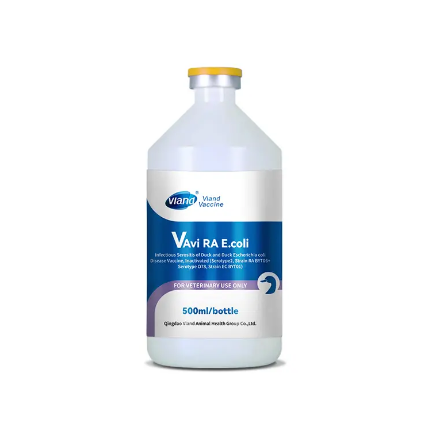
In the field of veterinary medicine, their application is already highly mature. Disease control in intensive waterfowl farming relies heavily on these targeted tools. Breeders formulate and deploy specific hyperimmune serums to protect their flocks. For example, goose parvovirus antibodies are deployed extensively across global agricultural networks. These homologous serums are highly cross-protective. They serve as an essential frontline defense for the prevention of gosling plague (Derzsy's disease). Without them, parvovirus outbreaks would devastate young bird populations rapidly.
Homologous therapeutics perform exceptionally well in these veterinary cohorts. An avian-to-avian treatment completely avoids the rapid systemic clearance seen with foreign mammalian proteins. Evidence-based observations show they vastly outperform mammalian-derived treatments in fowl populations. They offer immediate, sustained passive immunity to infected birds. They also avoid triggering anti-mammalian immune responses inside the treated animals. This precise biological matching ensures the administered antibodies remain active much longer in the bird's circulatory system.
Mammalian IgG production typically requires highly invasive blood collection. Technicians must repeatedly bleed rabbits, mice, or goats to harvest serum. This process raises serious ethical concerns and increases animal welfare costs. In sharp contrast, avian antibody extraction utilizes non-invasive methods. You can harvest high yields directly from laid egg yolks. The animals experience zero distress during the daily collection process. This routine harvesting aligns perfectly with modern humane research standards.
The yield evaluation heavily favors avian sources for scaled production. A single laying bird produces massive amounts of targeted immunoglobulins annually. You can reliably harvest over 20 grams of total immunoglobulin per bird each year. You would need to house and bleed four to five separate rabbits to match this output. Consequently, you drastically reduce laboratory animal housing expenses. You also eliminate extensive ethical compliance overhead, such as complex IACUC approvals required for invasive mammalian procedures.
However, you must actively acknowledge certain processing realities. Implementing yolk extraction introduces distinct purification hurdles for laboratory teams. You cannot use standard mammalian Protein A or Protein G affinity chromatography. These conventional bacterial proteins simply do not bind avian IgY or IgG effectively. Instead, you must isolate the target antibodies from complex yolk lipid matrices.
Here are the specialized processing steps you must adopt:
Water dilution: You must heavily dilute the yolk to destabilize and separate the dense lipid fractions.
PEG precipitation: You apply polyethylene glycol to precisely precipitate the desired immunoglobulins from the aqueous layer.
Thiophilic adsorption: You utilize specialized affinity chromatography columns to achieve high-purity protein isolation.
Buffer exchange: You carefully transition the purified proteins into validated, stable storage buffers for long-term use.
Choosing the correct biological reagent depends entirely on your specific end goal. Avian immunoglobulins are highly specialized tools. They are not a universal replacement for all mammalian IgG. You need a clear, objective framework to guide your procurement decisions effectively.
Below is a functional comparison chart to help you evaluate your laboratory options:
Decision Factor | Choose Mammalian IgG If... | Choose Duck Antibodies If... |
|---|---|---|
Purification Platform | The assay relies entirely on standard Protein A/G/L purification. | Your lab can support water dilution and PEG precipitation protocols. |
Effector Functions | You require secondary immune effector functions like ADCC or CDC. | You need biologically silent targeting without triggering Fc activation. |
Assay Interference | Background noise from RF or HAMA is not a clinical concern. | You are developing diagnostic kits prone to severe background interference. |
Therapeutic Target | You leverage existing, validated humanized antibody platforms. | You are formulating mucosal therapeutics or targeting highly conserved mammalian proteins. |
Veterinary Focus | You are treating standard domestic mammalian pets like dogs or cats. | You are actively developing rapid veterinary treatments for waterfowl. |
You must actively manage specific adoption risks when switching protocols. Evaluators need to source highly specialized secondary antibodies for laboratory detection. Standard anti-mouse or anti-rabbit secondary antibodies will not recognize duck immunoglobulins naturally. They will produce zero signal. Additionally, you must rigorously validate new storage and purification buffers. Avian-derived proteins behave differently in solution compared to serum-derived mammalian IgG. Planning for these specific technical shifts ensures a smooth, uninterrupted laboratory transition.
Duck immunoglobulins serve as a high-precision alternative for specific scientific challenges. They do not replace mammalian IgG across the board. Instead, they excel precisely where traditional reagents fail. By embracing this phylogenetically distinct tool, you can unlock new diagnostic clarity and novel therapeutic capabilities.
Keep these concise takeaways and action steps in mind as you plan your next development cycle:
Audit your background noise: Identify assays currently suffering from HAMA or RF interference and run parallel tests using avian blockers to quantify improvement.
Pilot small-scale validations: Procurement teams should acquire small batches of avian-derived reagents to establish baseline compatibility with existing ELISA or flow cytometry protocols.
Leverage natural truncations: Utilize the 5.7S subclass specifically when you need precise epitope targeting without triggering unintended secondary inflammatory cascades.
Adopt homologous veterinary models: Source specific avian reference panels to accurately model and deploy effective treatments for devastating waterfowl diseases.
A: Yes. Mammalian secondary antibodies will not naturally cross-react with duck immunoglobulins. You must use specific anti-duck IgY or anti-duck IgG secondary antibodies to achieve proper detection and signal amplification in your specialized assays.
A: Its natural lack of an Fc region prevents it from binding to mammalian complement or Fc receptors. It acts as an inherently pure blocking or targeting agent. You can use it reliably without triggering any secondary immune cascades.
A: No. Avian immunoglobulins completely lack the necessary binding sites for Protein A or Protein G. You must purify them using alternative extraction methods. Common approaches include thiophilic adsorption, water dilution, PEG precipitation, or specialized affinity columns.
A: They are highly effective. Duck-derived hyperimmune serums serve as a standard, clinically validated intervention. They offer immediate passive immunity to young birds and remain crucial for halting lethal viral outbreaks across commercial agricultural flocks.


