
English


Views: 0 Author: Site Editor Publish Time: 2026-04-02 Origin: Site


In in vitro diagnostics (IVD), assay developers constantly battle a persistent challenge. Background noise, matrix interference, and false positives routinely compromise test accuracy. These issues often stem from mammalian-derived components interacting with complex patient samples. Interacting agents like Human Anti-Mouse Antibodies (HAMA) or Rheumatoid Factor (RF) bind non-specifically. They ruin baseline sensitivity and confuse clinical interpretations.
Fortunately, developers can look beyond traditional mammalian sources. We can introduce duck antibodies, specifically avian IgY and its truncated IgY(ΔFc) variant. They offer a structurally distinct, high-specificity alternative. They naturally engineer out these foundational assay limitations by ignoring mammalian interferents entirely.
Transitioning to these avian components requires careful planning and rigorous testing. We must thoroughly evaluate their biochemical advantages, platform compatibility, and supply-chain scalability. You must understand how they behave in commercial assays. This guide explores how you can leverage these unique biological tools to elevate diagnostic precision and streamline your manufacturing processes.
Phylogenetic Distance: Duck antibodies eliminate mammalian cross-reactivity, drastically reducing false positives in human clinical diagnostics without requiring costly blocking agents.
High Signal-to-Noise Ratio: Their unique Fc structure prevents non-specific binding, offering superior baseline sensitivity in ELISAs and Rapid Tests (POCT).
Veterinary & Agricultural Criticality: They are indispensable for targeted avian disease management, such as tracking goose parvovirus antibodies for the prevention of gosling plague.
Scalable Validation: Successful integration relies on a strict 5-dimensional validation model: specificity, sensitivity, repeatability, stability, and practicability.
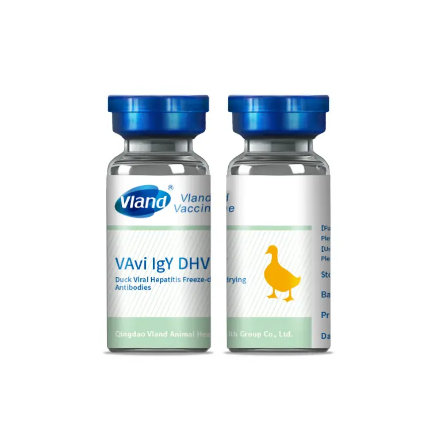
Diagnostic architects rely heavily on mouse and rabbit immunoglobulins. We trust these mammalian tools for countless baseline diagnostic tests. However, complex biological matrices frequently expose their technical limitations. Blood, serum, and tissue samples contain thousands of heterogeneous native proteins. These native proteins easily interact with mammalian assay components. Such unwanted interactions create significant background noise.
The most notorious culprits in human diagnostics are Human Anti-Mouse Antibodies (HAMA) and Rheumatoid Factor (RF). These interfering agents occur naturally in many patient samples. They aggressively target and bind to the Fc region of mammalian assay components. This non-specific binding often bridges the capture and detection layers improperly. As a result, you see catastrophic false positive signals. Alternatively, steric hindrance from these massive protein complexes can block target binding entirely. This obstruction leads to dangerous false negatives.
Inaccurate assays carry severe downstream clinical and operational risks. You face delayed clinical diagnoses and heavily compromised patient care. Regulatory bodies scrutinize flawed diagnostic products closely. Manufacturers often face mandatory product recalls if interference rates climb. To salvage these sensitive assays, developers typically purchase expensive commercial blocking buffers. These heavy chemical additives attempt to mask the interfering proteins. However, they complicate manufacturing and dilute assay sensitivity.
We must acknowledge a transparent reality regarding assay design. Mammalian antibodies firmly remain the industry standard for many basic diagnostic applications. They work perfectly well in purified buffer systems. However, ignoring matrix interference in complex clinical assays is highly dangerous. It leads to fundamentally flawed diagnostic products. We need a structural workaround to bypass these biological roadblocks completely.
We find a compelling technical solution in avian biochemistry. Ducks produce a unique class of immunoglobulins called IgY. They also naturally produce a smaller, truncated variant known as IgY(ΔFc). These structures differ fundamentally from standard mammalian IgG. You can leverage this evolutionary structural divergence to improve assay performance drastically.
Ducks are phylogenetically distant from mammals by hundreds of millions of years. Because of this vast evolutionary gap, their immune proteins ignore mammalian interferents. Avian IgY does not interact with the mammalian complement system. It also fails to bind to mammalian Fc receptors, HAMA, or RF. By switching your capture agents to avian variants, you naturally engineer out background noise. You completely eliminate the primary source of non-specific clinical binding.
This phylogenetic distance offers another massive diagnostic advantage. You often struggle to raise effective capture agents against highly conserved mammalian proteins. Mice and rabbits tolerate these conserved proteins as "self," producing very weak immune responses. Ducks, however, immediately recognize these mammalian proteins as foreign invaders. They mount a robust, high-affinity immune response. This evolutionary trick allows you to target elusive biomarkers effectively.
Furthermore, avian polyclonal mixtures excel at diagnostic signal amplification. They recognize multiple distinct epitopes on a single target antigen simultaneously. You can deploy them as secondary capture agents in sandwich ELISAs. They bind aggressively to the target complex from multiple angles. This multi-epitope recognition allows for massive signal amplification. It significantly boosts the overall baseline sensitivity of your test.
Biochemical Feature | Mammalian IgG (Mouse/Rabbit) | Avian IgY (Duck) |
|---|---|---|
Cross-Reactivity with HAMA/RF | High (Requires heavy blocking) | Zero (Structurally incompatible) |
Complement System Activation | Yes (Can degrade sample integrity) | No (Inert in mammalian matrices) |
Immunogenicity to Conserved Antigens | Low (Often recognized as self) | High (Recognized as foreign) |
Primary Extraction Method | Invasive blood collection | Non-invasive egg yolk extraction |
We must map these avian components to specific diagnostic platforms carefully. Their distinct biochemical benefits become highly pronounced in certain assay formats. Assessing platform compatibility helps you maximize their performance.
Developers frequently use avian components to overcome severe cross-reactivity issues in ELISAs. For example, distinguishing between closely related Flaviviruses is notoriously difficult using standard mouse monoclonals. You can pair avian components with specifically engineered subviral particles. This strategy maintains the delicate 3D conformational integrity of the target antigen during plate coating. By protecting these structural epitopes, you achieve near-100% specificity in complex viral screening panels.
Next, evaluate Lateral Flow Assays (LFAs) for Point-of-Care Testing (POCT). Colloidal gold immunochromatographic assays represent the undisputed gold standard here. They offer rapid, field-ready detection in just 10 to 15 minutes. Avian components maintain remarkable stability in these demanding, low-resource environments. They perform exceptionally well under varying thermal stress and high humidity. This makes them ideal for decentralized testing applications.
To ensure commercial success, diagnostic developers must evaluate these novel assays rigorously. We strongly recommend using a strict 5-dimensional validation matrix before any market rollout:
Specificity: You must prove absolute zero off-target binding against closely related interferents or pathogens.
Sensitivity: You must establish the absolute lowest limit of detection compared to your current mammalian baseline.
Repeatability: You must track the batch-to-batch coefficient of variation (CV) meticulously to ensure manufacturing consistency.
Stability: You must verify long-term shelf-life through accelerated thermal stress testing at 37°C.
Practicability: You must assess the ease of use and readout clarity in the intended target environment.
Beyond human clinical diagnostics, avian components dominate specific veterinary niches. Species-specific immune tools are absolutely non-negotiable in agricultural environments. They drive effective flock management and actively protect global agricultural economics.
Rapid pathogen tracking relies heavily on these targeted biological tools. Emerging viral threats like Duck Tembusu Virus or highly pathogenic Avian Influenza can devastate commercial flocks overnight. Early detection prevents widespread flock transmission. Farmers and veterinarians need immediate, actionable diagnostic data directly in the field.
We see this criticality clearly when targeting specific, highly lethal waterfowl threats. Accurate flock screening for goose parvovirus antibodies is an absolute operational necessity. Precise, rapid field tests form the frontline defense mechanism. They are fundamentally essential for the prevention of gosling plague. Without these specific rapid tests, farmers face catastrophic economic losses and complete herd decimation in waterfowl agriculture.
Field evidence strongly supports this decentralized diagnostic approach. Rapid POCT devices utilizing targeted avian components perform exceptionally well during active outbreaks. They frequently demonstrate 80% to 90% clinical concordance when compared directly with laboratory RT-PCR. This high accuracy occurs even in early-onset symptomatic cases. Better yet, they deliver these accurate results in minutes, bypassing the delays of central laboratory shipping.
Switching your primary diagnostic raw materials introduces real operational risks. You must address implementation hurdles and supply constraints early. Procuring high-quality avian components requires careful, methodical supplier evaluation.
First, you must decide between polyclonal and monoclonal production pipelines. Polyclonal extraction from avian egg yolks offers massive distinct advantages. It provides exceptionally high yields per bird. It utilizes ethical, non-invasive collection methods. It remains highly cost-effective for large-scale manufacturing. Conversely, you might require engineered recombinant avian monoclonals. These specialized formats provide absolute batch-to-batch consistency for strictly regulated human assays.
What should a diagnostic architect demand from a raw material vendor? You must enforce strict technical evaluation criteria before signing supply agreements. Look for the following capabilities:
Transparent Validation Data: Demand knockout or knockdown validation data proving absolute target specificity.
Documented Cross-Reactivity Profiling: Request extensive profiling against known interfering agents and related viral strains.
Long-Term Stability Data: Require comprehensive degradation testing reports, specifically accelerated aging at 37°C.
Scalable Manufacturing: Verify their extraction and purification capacity to prevent future supply-chain bottlenecks.
We advise starting your transition with a tightly controlled, small-scale pilot. Order sample aliquots from a reputable vendor. Run a rigorous side-by-side comparison with your existing mammalian IgG diagnostic assays. Measure the exact reduction in background noise objectively. Quantify how much blocking buffer you can eliminate before committing to full-scale commercial integration.
Duck-derived components represent a powerful, strategic biochemical workaround for diagnostic developers. They are not merely a niche biological novelty. They actively solve the inherent biochemical flaws of mammalian-based assays. They eliminate matrix interference and provide unmatched signal clarity. Furthermore, they remain an absolute necessity for targeted agricultural diagnostics and viral control.
If your development team struggles with persistent false positives, take action now. If you constantly battle low clinical sensitivity or formulation challenges, explore this alternative path. You can significantly optimize your diagnostic architecture by utilizing phylogenetic distance.
Review Assay Limitations: Identify exactly where matrix interference causes your current false positive rates.
Request Validation Data: Ask prospective vendors for comprehensive cross-reactivity and thermal stability sheets.
Execute a Pilot Test: Compare avian IgY side-by-side with your mammalian IgG using complex clinical samples.
Optimize Your Formulation: Remove excessive commercial blocking agents to observe the natural baseline sensitivity increase.
A: Yes, slightly. While standard conjugation protocols like HRP or Biotin remain very similar, formulation buffers require adjustment. Because IgY has a distinct isoelectric point and higher surface hydrophobicity than IgG, you must optimize your buffer pH and salt concentrations to prevent unwanted precipitation.
A: No, not entirely. While they drastically reduce the need for specialized, expensive blocking against HAMA and RF interferents, basic physical blocking is still necessary. You must still use standard surface blockers like BSA or Casein to coat the empty plastic on microtiter plates or nitrocellulose membranes.
A: When properly formulated, they perform exceptionally well over time. In lyophilized form or optimized colloidal gold conjugates, they match or exceed the stability of traditional mammalian IgG. They routinely remain fully viable for 12 to 24 months across standard operational temperatures.


