
English


Views: 0 Author: Site Editor Publish Time: 2026-03-31 Origin: Site


Developing diagnostic assays for non-model organisms presents unique structural hurdles. Researchers frequently discover standard mammalian immunological frameworks fail entirely when applied to waterfowl. Avian species possess vastly distinct immunoglobulin architectures. This complex biology, alongside a severe lack of commercially available, high-specificity secondary reagents, routinely causes downstream assay failures. Selecting reliable Duck antibodies requires you to navigate complicated isotype profiles. You must thoroughly understand the coexistence of full-length and truncated immunoglobulins to ensure diagnostic accuracy. Furthermore, prioritizing rigorous cross-reactivity validation prevents false negatives in high-stakes veterinary and research applications. This technical breakdown delivers a practical framework to evaluate, shortlist, and successfully implement avian-specific reagents. You will learn how to bypass fundamental structural limitations and mitigate downstream assay failure risks effectively.
Duck serum primarily contains IgM, IgA, and two distinct forms of IgG/IgY (7.8S and a truncated 5.7S), which fundamentally dictate secondary antibody selection.
The dominant 5.7S IgY(ΔFc) lacks standard Fc-mediated secondary effector functions, requiring specialized assay design (e.g., blocking ELISAs) for accurate diagnostic readouts.
Proper validation for non-model organism antibodies demands sequence homology checks (>85%), epitope mapping, and cross-adsorption to eliminate background noise in multiplexing.
Procurement shortlisting must align with the end-goal: monoclonal antibodies (mAbs) for high-specificity epitope targeting, versus rigorously validated polyclonal secondary antibodies for amplified detection.
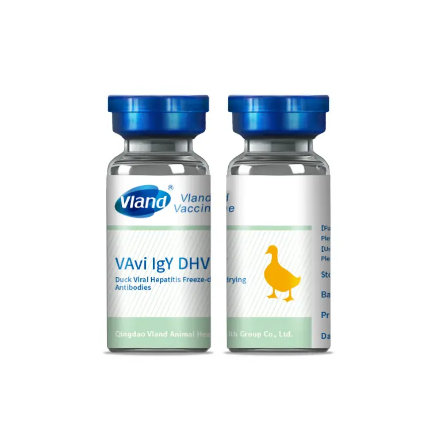
Mammalian-centric assay designs often fail in waterfowl research. Diagnostic developers typically assume a standard IgG structure applies universally. This represents a critical common mistake. Duck humoral immunity relies on distinct molecular genetics. If you apply mammalian assumptions to avian biology, your assays will generate significant false negatives.
Avian immune systems deploy a sophisticated array of distinct immunoglobulin classes. IgM exists largely as high-molecular-weight polymers. These structures weigh approximately 800 kDa. They drive the early immune response effectively. Conversely, secretory IgA handles mucosal defense across the respiratory and gastrointestinal tracts.
The most critical challenge involves the 7.8S versus 5.7S dichotomy. Ducks express a full-length 7.8S IgY. This structure acts homologous to mammalian IgG. However, ducks also express a unique truncated variant known as 5.7S IgY(ΔFc). This truncated form eventually dominates the late-stage immune response in several waterfowl species.
The 5.7S variant poses severe limitations for traditional diagnostic frameworks. It completely lacks the Fc region. In standard mammalian models, the Fc region drives secondary effector functions. These functions include complement fixation and standard secondary antibody binding. Diagnostic developers must rigorously verify whether their chosen secondary reagents can recognize these truncated formats. A standard anti-Fc secondary antibody will simply fail to bind the 5.7S variant. You must adjust your strategy to target the Fab region or utilize alternative detection frameworks.
Summary Chart: Mammalian vs. Duck Immunoglobulin Structures
Immunoglobulin Type | Approximate Molecular Weight | Structural Characteristics | Secondary Assay Binding |
|---|---|---|---|
Standard Mammalian IgG | 150 kDa | Full-length heavy and light chains, complete Fc region | Binds standard anti-Fc reagents easily |
Duck 7.8S IgY | 180 kDa | Structurally similar to IgG, extended heavy chain | Compatible with specific anti-avian Fc reagents |
Duck 5.7S IgY(ΔFc) | 120 kDa | Truncated, lacks entirely the Fc region | Requires Fab-specific or blocking assay designs |
Navigating commercial catalogs requires high precision. You must align antibody clonality and the host species directly to your intended diagnostic outcome. Selecting the wrong category wastes substantial budget and delays critical research timelines.
Primary monoclonal antibodies provide unparalleled precision. They target a single, specific epitope on the antigen. This precision proves essential for precise viral antigen detection. For instance, developers frequently use mAbs to target specific duck circovirus capsid protein epitopes. Furthermore, mAbs provide the mandatory batch-to-batch consistency needed to scale commercial diagnostic kits. Once you sequence the hybridoma, you guarantee long-term supply stability without performance drift.
Secondary antibodies recognize and bind to the primary duck antibodies. You use them primarily to amplify weak signals. Most commercial vendors utilize goats to raise these reagents, creating "Goat anti-duck" products. When selecting these reagents, you must evaluate the conjugate strictly based on your readout method.
Horseradish Peroxidase (HRP): Best suited for Western Blotting and standard indirect ELISAs. HRP provides excellent enzymatic signal amplification.
Fluorescein Isothiocyanate (FITC): Optimal for Immunofluorescence (IF). FITC delivers strong fluorescent signals for tissue section imaging.
Biotin: The best choice for Flow Cytometry or highly amplified avidin-biotin complex (ABC) systems. It allows extreme sensitivity.
Multiplex assays demand careful risk mitigation. When analyzing multiple targets simultaneously, background noise ruins data integrity. Utilizing F(ab')2 fragments or pre-adsorbed secondary antibodies acts as a necessary risk mitigation step. Pre-adsorption filters the reagent against serum proteins of closely related species. This step actively prevents cross-reactivity and ensures your secondary antibody binds only its intended target.
The right reagent selection directly dictates your diagnostic efficacy. Accurate screening for severe agricultural pathogens requires flawless antibody integration. A poorly selected antibody yields disastrous outcomes for integrated hatchery environments and flock health management.
Species-specific secondary conjugates for waterfowl remain historically limited. To overcome this, clever developers increasingly utilize mAb-based blocking ELISAs. This method entirely bypasses the need for anti-species secondary antibodies. In a B-ELISA format, serum antibodies from the infected animal compete against a labeled, highly specific monoclonal antibody for antigen binding sites.
If the animal possesses antibodies against the pathogen, they block the labeled mAb from binding. This creates a quantifiable reduction in signal. This approach allows high-throughput detection of novel threats like duck reovirus (NDRV). Because it ignores the species origin of the competing serum, you can test multiple waterfowl species simultaneously on the same plate.
Diagnostic precision in specific avian species often translates to broader flock health management. Pathogens frequently cross between ducks, geese, and swans. Rapid pathogen identification saves entire agricultural operations. For example, accurate detection and quantification of goose parvovirus antibodies using cross-reactive or highly specific avian panels proves critical. You need this data to drive the active prevention of gosling plague (Derzsy's disease) in integrated hatchery environments. By leveraging precise avian monoclonal antibodies, veterinary teams can isolate infected birds earlier and deploy targeted vaccination strategies effectively.
Sourcing biological reagents for non-model organisms carries exceptionally high risks of off-target binding. Trustworthy procurement requires transparent validation data. Never trust an antibody catalog listing lacking raw empirical data.
Sometimes researchers must use antibodies raised against closely related species due to supply limits. In these scenarios, bioinformatic sequence alignment becomes your first line of defense. You must use tools like CLUSTALW to compare the original immunogen sequence against your target duck antigen. The alignment must demonstrate greater than 85% homology. Falling below this threshold drastically reduces reliable binding probability. Best practice dictates running this in silico check before submitting any purchase order.
Robust validation requires multiple independent testing methods. You must demand high-quality evidence from your suppliers or perform it internally.
Knock-out (KO) Validation: Look for KO validation data to confirm the absence of off-target effects. Testing the antibody on a cell line genetically modified to lack the target protein proves ultimate specificity. A clean KO lane in a Western Blot represents the gold standard.
Epitope Mapping: Review epitope mapping data to understand exactly where the antibody binds. This helps predict potential cross-reactivity with homologous proteins.
Performance Correlation: Cross-reference the antibody's performance against accepted gold standards. For viral diagnostics, compare ELISA readouts against Virus Neutralization Tests (VNT). High correlation confirms functional diagnostic value.
A common mistake ruins countless experiments: assuming universal application compatibility. An antibody validated solely in Western Blotting interacts with denatured, linear proteins. You should never assume it functions in Flow Cytometry or Immunohistochemistry (IHC). These applications present proteins in their native, folded state. Conformational epitopes look entirely different from linear epitopes. Always demand explicit empirical evidence matching your specific assay conditions.
Application vs. Protein State Table
Assay Application | Target Protein State | Antibody Requirement |
|---|---|---|
Western Blot (WB) | Denatured / Linearized | Must recognize linear amino acid sequences |
Flow Cytometry | Native / 3D Conformation | Must recognize surface-exposed, folded epitopes |
Immunohistochemistry (IHC-P) | Cross-linked / Masked | Must withstand formalin fixation or require antigen retrieval |
Blocking ELISA | Native / Recombinant | Must strongly compete for precise active sites |
Transitioning an assay from a small research lab to a commercial clinical environment introduces massive supply chain complexities. You must evaluate reagents not just for performance, but for long-term commercial viability.
Moving from Research Use Only (RUO) to clinical diagnostic scale requires strict supplier audits. You must evaluate the manufacturer's ability to provide recombinant antibodies or execute large-batch monoclonal production. Relying on small-batch ascites production invites unacceptable lot-to-lot variation. Recombinant manufacturing guarantees long-term sequence stability and identical performance ten years down the line.
Biochemical formulation often dictates downstream success. Pay extreme attention to the carrier buffer.
Buffer Realities: Ensure the chosen product does not contain sodium azide if you intend to run in-vivo functional assays. Sodium azide acts as a severe cytotoxin. It also interferes with amine-based conjugation chemistries. If your product contains it, you must perform resource-heavy dialysis to remove it before proceeding.
Storage Risk Mitigation: Bulk purchases require careful handling upon arrival. You must aliquot the stock carefully into single-use volumes. Repeated freeze-thaw cycles rapidly degrade avian immunoglobulins, destroying titer strength and assay sensitivity.
Follow a structured procurement logic to minimize risk and accelerate development.
Define the required target reactivity and acceptable species cross-reactivity limits for your specific project.
Audit the supplier's application-specific validation data strictly. Compare B-ELISA data versus standard indirect ELISA data.
Confirm the immediate availability of matched, highly specific secondary conjugates if your assay requires indirect detection.
Request bulk-lot reservations alongside smaller trial sizes. Run initial optimization on the trial size while ensuring identical stock remains available for scale-up.
Sourcing duck antibodies goes far beyond standard procurement exercises. It requires a deep, fundamental understanding of avian molecular genetics. You must navigate the specific limitations imposed by the truncated IgY(ΔFc) isotype carefully. By prioritizing transparent validation data, you eliminate the risks associated with off-target binding. Matching antibody clonality to the assay's precise scalability needs guarantees long-term commercial viability. Furthermore, implementing appropriate controls for cross-reactivity allows research and diagnostic teams to confidently integrate duck immunoglobulins into their development pipelines. Mastering these biological and procurement parameters minimizes costly optimization delays and accelerates critical diagnostic breakthroughs in veterinary medicine.
A: Mammalian secondary antibodies are typically optimized for standard IgG structures. Ducks possess a unique truncated 5.7S IgY(ΔFc) isotype that lacks the traditional Fc region, severely limiting binding sites for standard anti-Fc secondary reagents.
A: Monoclonal antibodies (mAbs) target a single specific epitope, offering superior batch-to-batch consistency and lower background noise—critical attributes when developing scalable, commercial diagnostic kits like ELISAs for viral pathogens.
A: Upon receipt, antibodies should be divided into single-use aliquots (often with a cryoprotectant like glycerol if approved by the manufacturer) and stored at -20°C to -80°C. Avoiding freeze-thaw cycles is the single most effective way to preserve titer strength.


